
Near is Far
90km du Mont Blanc Recap

The bib goes on and I morph into a different cat. Still, I was patient and unhurried up the first monster climb to Brévent (10km), watching the snowy summit of Mont Blanc run pink with first light.
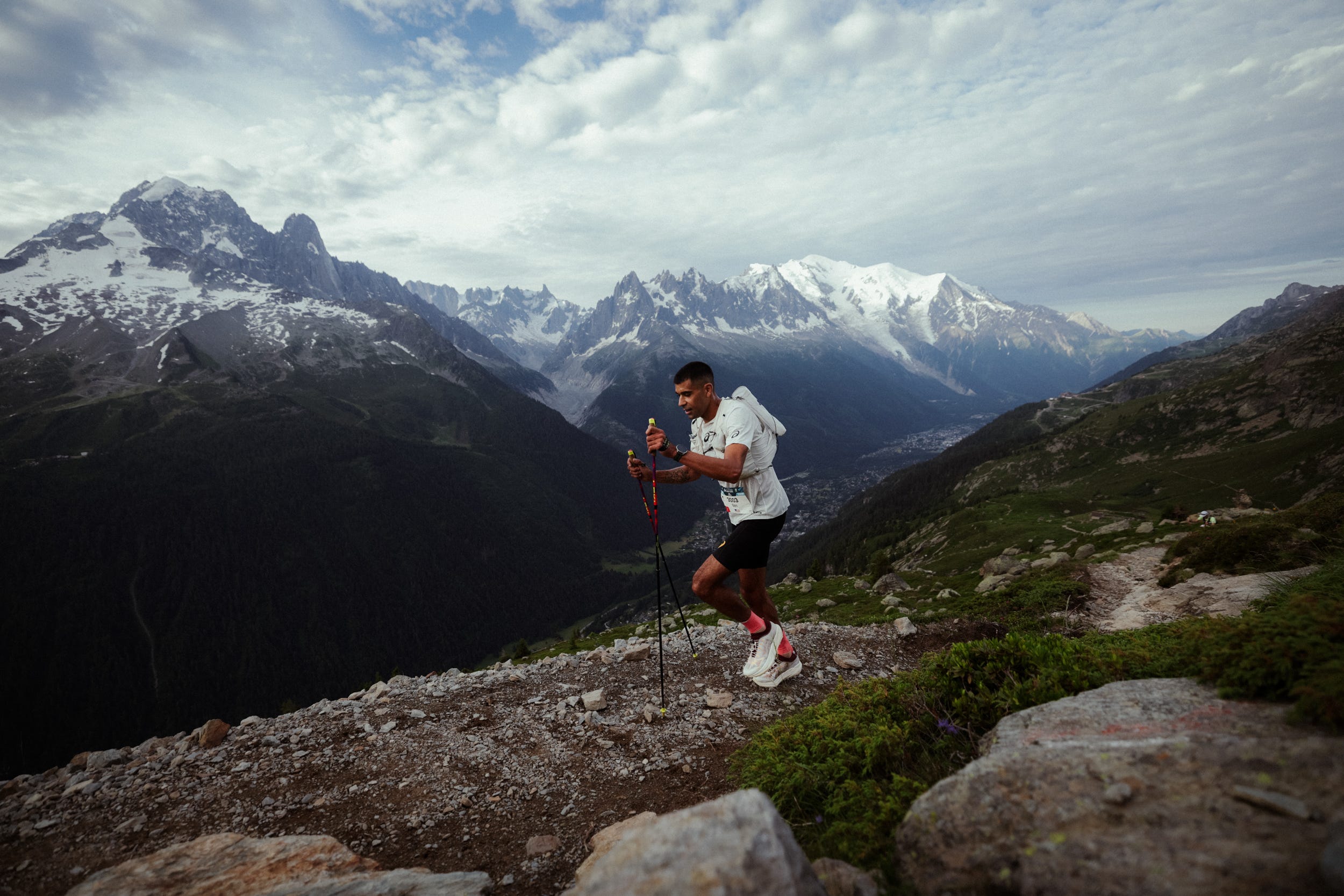
After two and half hours, the lead group was still ten strong. As we crest La Tête aux Vents (21.5 km), I weave toward the front, not wanting to get trapped on the technical descent to Col des Montets. I slot in behind Louison Coiffet (C) and Christian Minoggio (M) and, for the first time since arriving in Chamonix twelve days earlier, rock-hopping this awkward terrain felt easy as croissant.
When I find my crew in Le Buet (29 km), Cathy ties an ice bandana around my neck. It’s the first time I’ve used ice in a race, but with temperatures rivaling this year’s Western States, it seemed appropriate.
The next climb is very runnable and we’re joined at the front by a duo of Baptistes (Chassagne and Coatantiec). Even this early I could see that C was the strongest. He floated uphill with little effort, then transitioned seamlessly into fast downhill running.
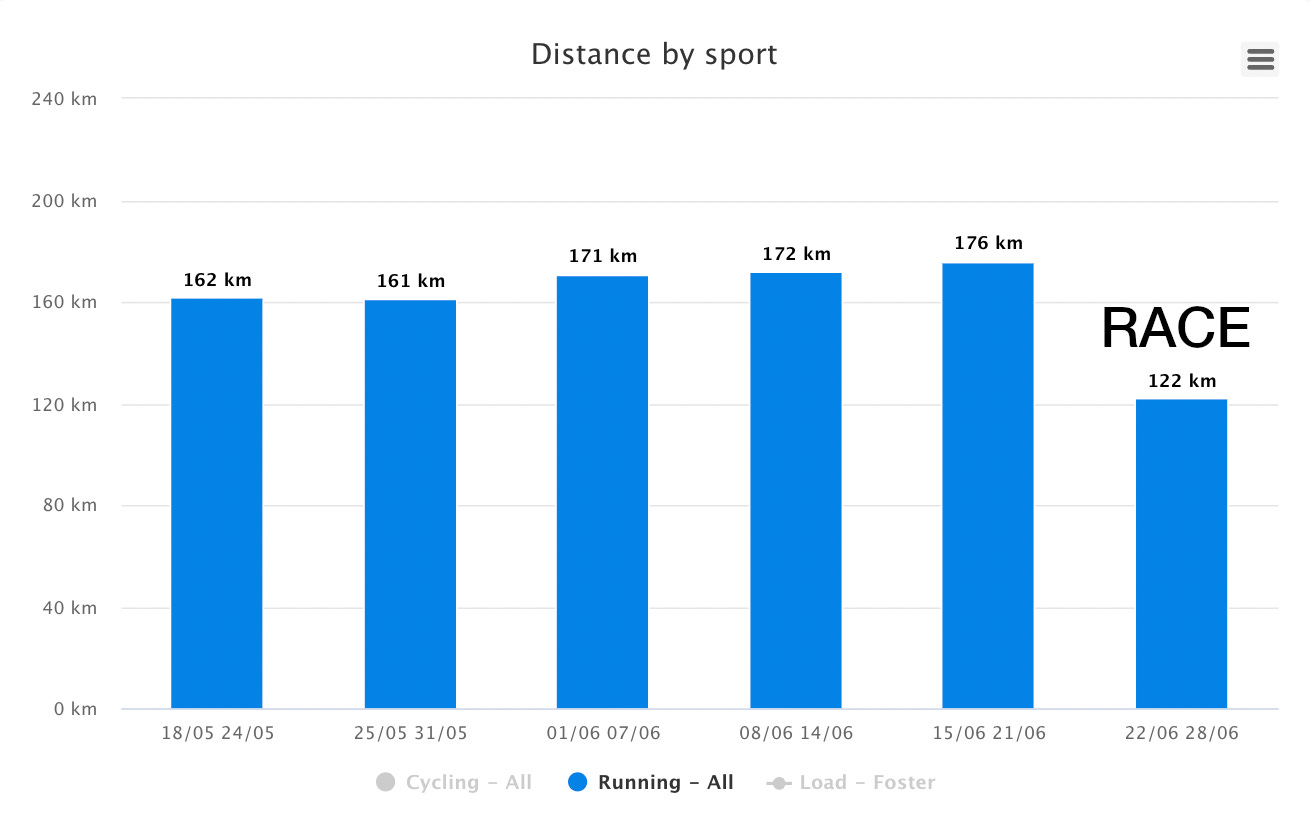
I wasn’t feeling strong on the climbs. My legs were heavy from a five-week block with no taper. It forced me to race smarter rather than harder, pushing only enough watts to stay in contact.
Then we hit my least favorite climb, where a judicious effort gets you nowhere. Seven hundred meters up to the Barrage d’Emosson, with pitches approaching 40% and loose footing. C and M floated ahead while Chassagne and I grunted our way to the top.
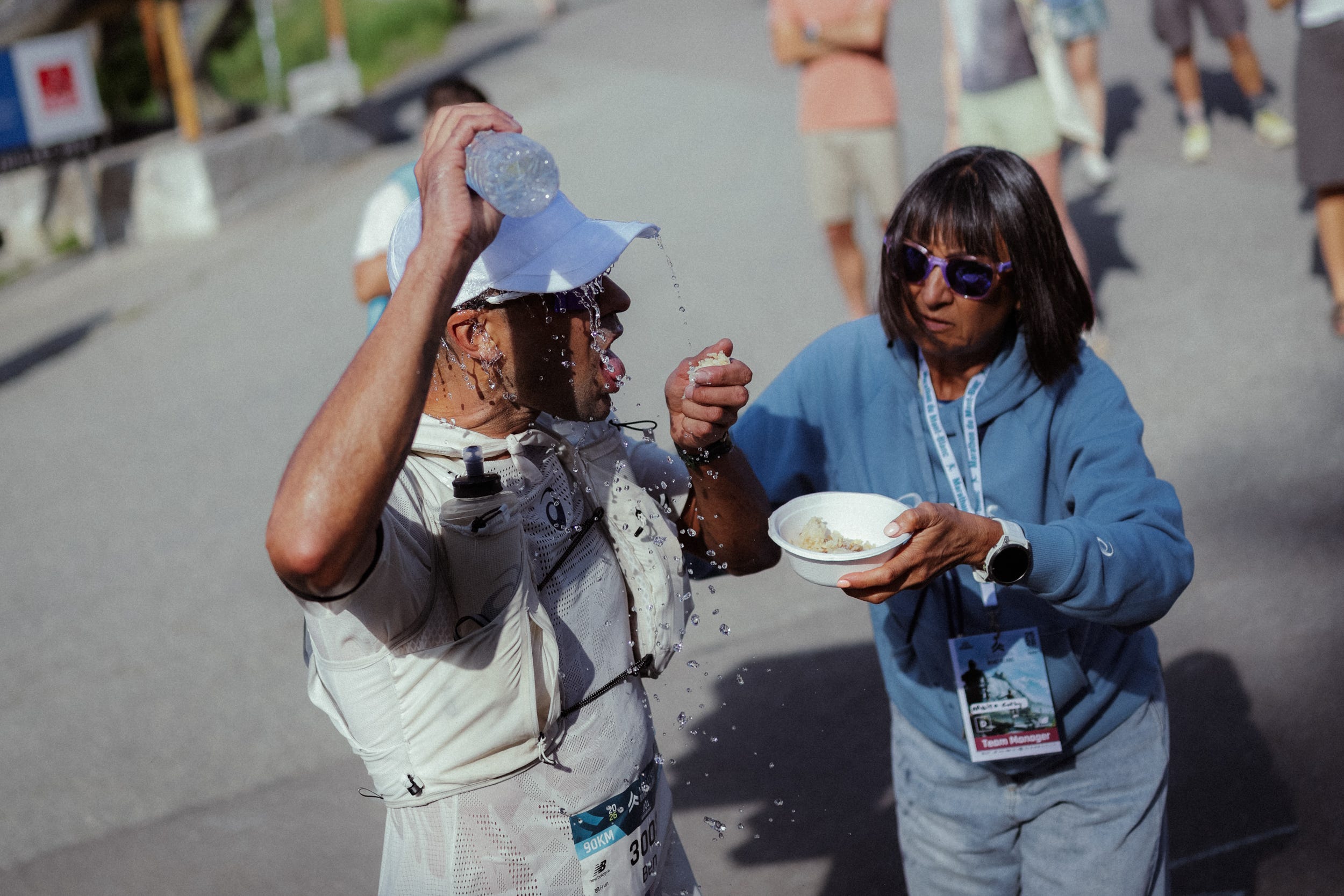
Crossing the dam, I was struck by how easy my legs felt on the flat. I cruised into my crew in good spirits, ate some rice, and chugged an Arizona Tea. Ahead lay the dreaded descent to Châtelard (45km). During the course recon I’d found it so difficult I had to walk sections.
But now, after four and a half hours of racing and ninety seconds behind the leaders, I glided down it. I didn’t slip, kick, or trip over a rock or root. I entered the flow state—and by the final section I’d found the heels of C and M.
Back in the game, I moved into first entering the next eternal climb (1,200 m D+) to Croix de Fer (53 km). For context, we’d already climbed half the day’s vertical: 3,100 of 6,200 meters. The pace uphill had been relentless. Anything under 20% we ran. C and M often kept running up 25 or even 30%, where I elected to hike.
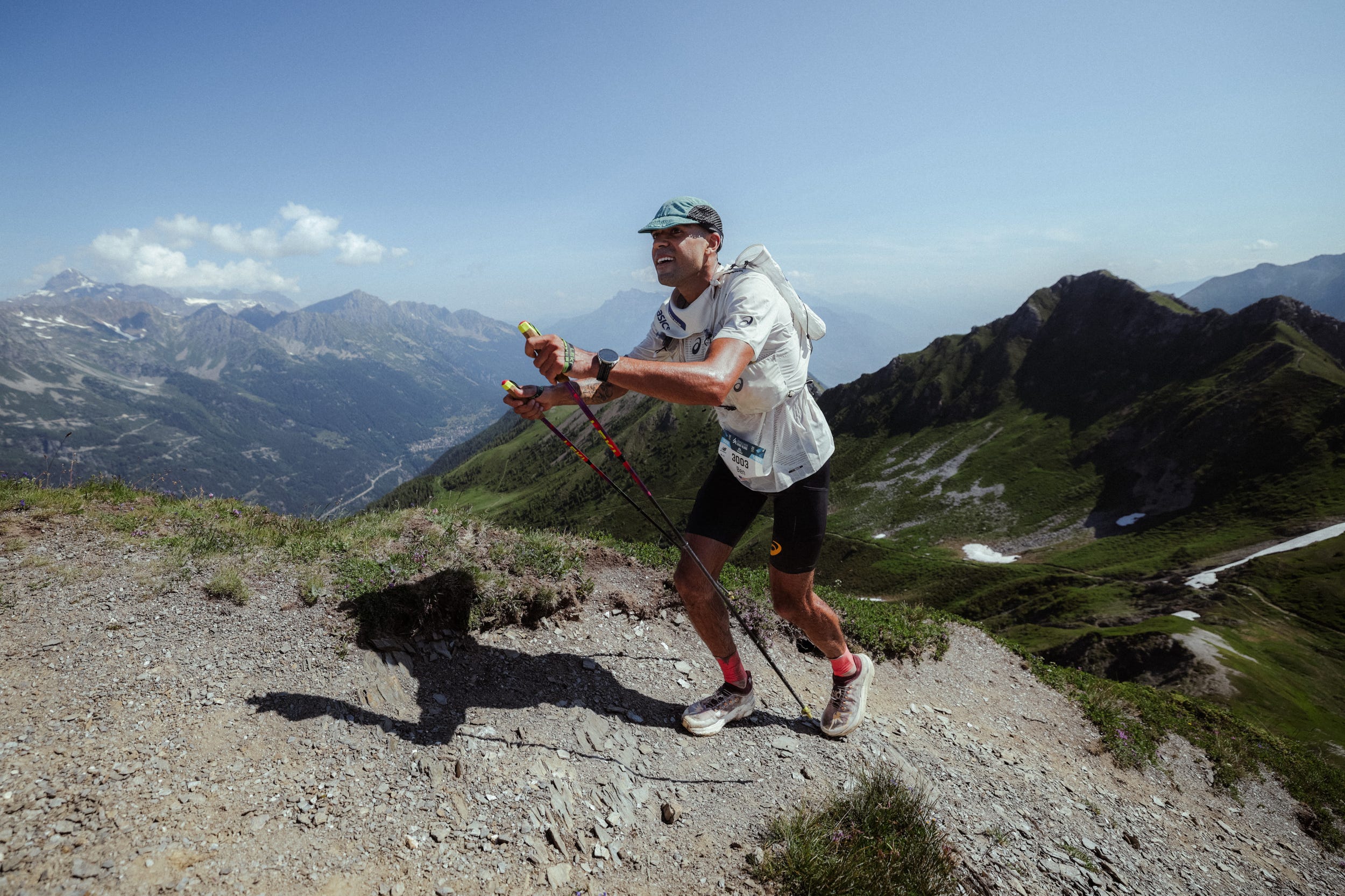
Each runner had a different technique on the steeper pitches. C was light on his toes. M had an interesting gait somewhere between running and hiking, almost like classic Nordic skiing, and it looked the most economical. If I could match them by hiking, I did. Often I couldn’t, and had to run to stay in touch.
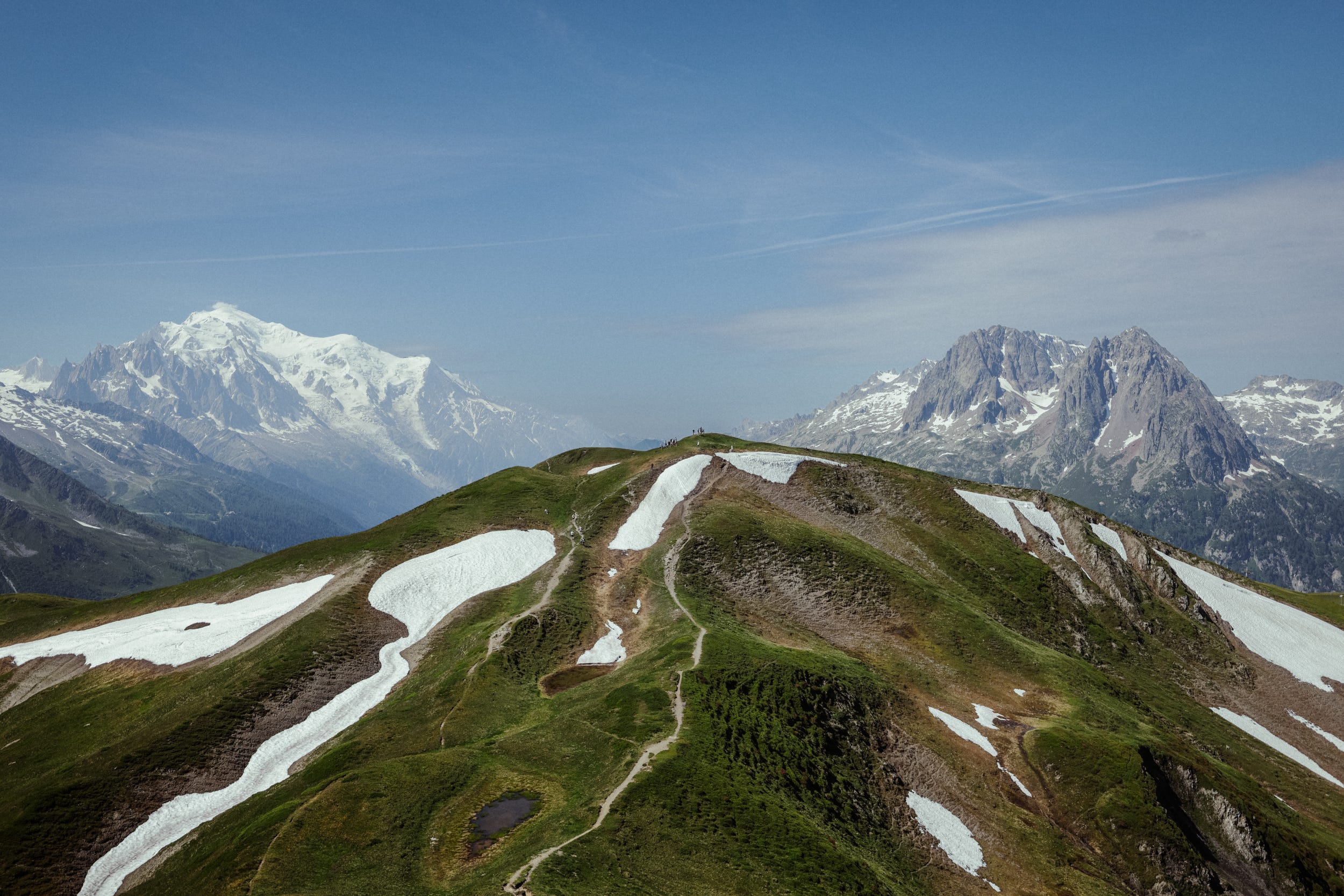
We topped out with big views of big mountains and the knowledge that the race was entering its final act.
The descent to Le Tour (60 km) flew by. My quads protested. My hamstrings threatened cramps. But the body needs a dictator. We would keep running. We would keep pushing. We would see this race to the end.
Then the suffering eased. I saw my crew, took on more ice, and followed C along a stretch of singletrack I know by heart toward Argentière. I sensed a moment of weakness in his stride and pushed ahead. I flowed over the rocks and opened my stride wherever the trail allowed. Over the next forty minutes I put two minutes into C, but M clung on. In retrospect, this was probably the moment to attack—to run aggressively instead of smoothly.
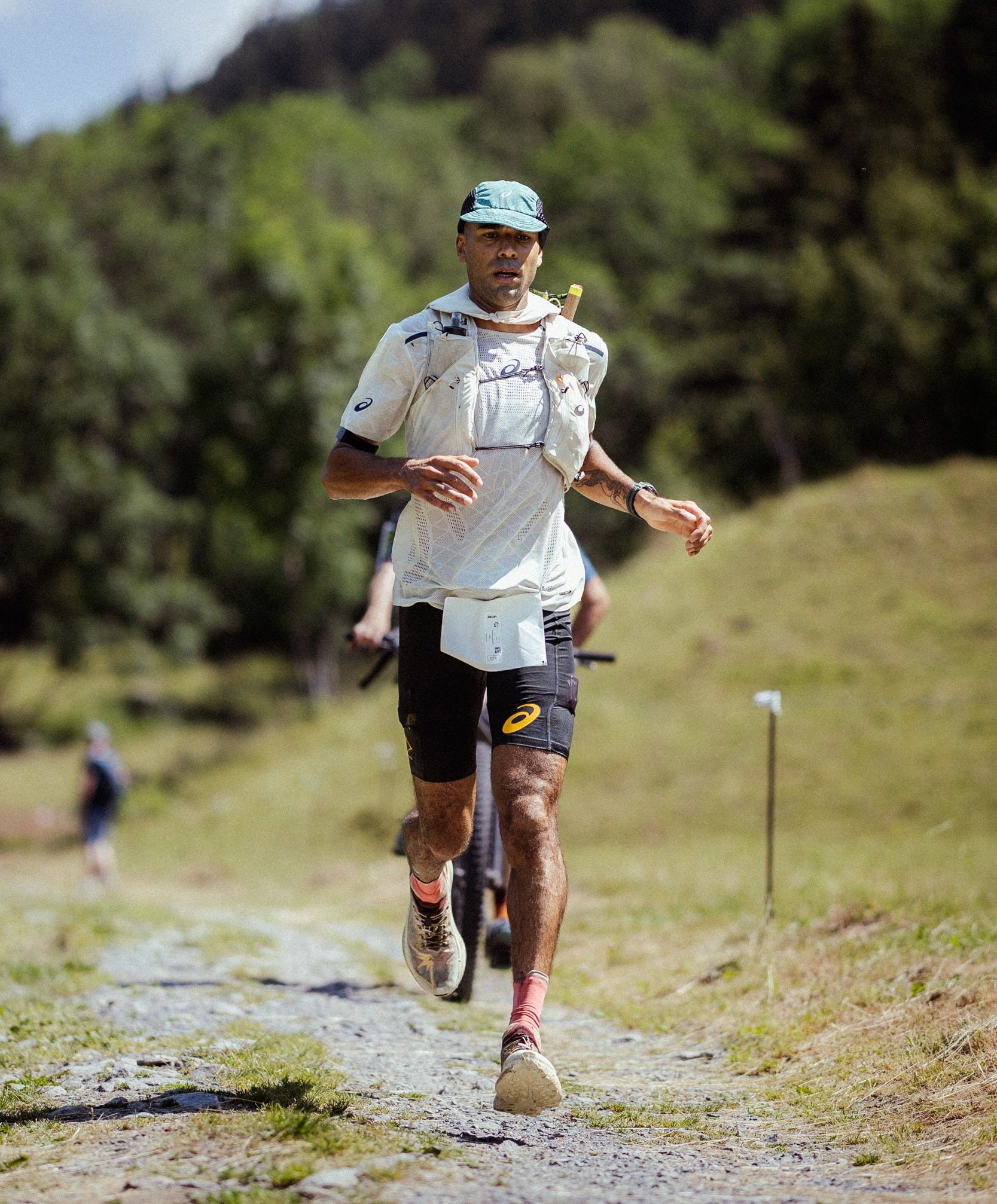
One last climb. A big one. Steep, rocky, and exposed up to Montenvers, Signal, and Plan de l’Aiguille. I knew it didn’t suit me, but we were all beginning to melt in the heat and I believed I could win a battle of attrition.
For ten minutes I set the pace. Then M took the reins. Behind us, C was trying to bridge back. He looked fatigued, but as we slowed through the technical terrain he caught us. On the final steep pitch he went ahead and I couldn’t follow. I tried. He wasn’t far, but I could see he had the dagger in his teeth.
On the traverse to Plan de l’Aiguille (81 km), I could see the red bag and his dogged stride. I worked hard, but the fatigue was immense. I understood his position. Leading late in a race changes your brain chemistry. The will to win becomes its own reactor. I refused to accept second place, but I didn’t have the same limitless fuel. My eyes turned to the descent and one last chance to reel him in.
I topped out with a gap ahead and behind and engaged the downhill—fifty-some switchbacks, moderately technical. A camera runner followed, soon huffing and puffing behind me. I danced around the corners and let the legs go wherever the trail allowed.
I told myself I might catch him. That we’d have a sprint finish. But the minutes passed and there was no one sight. Then I heard he was one minute ahead. Damn near impossible. Still, I kept feathering the accelerator.
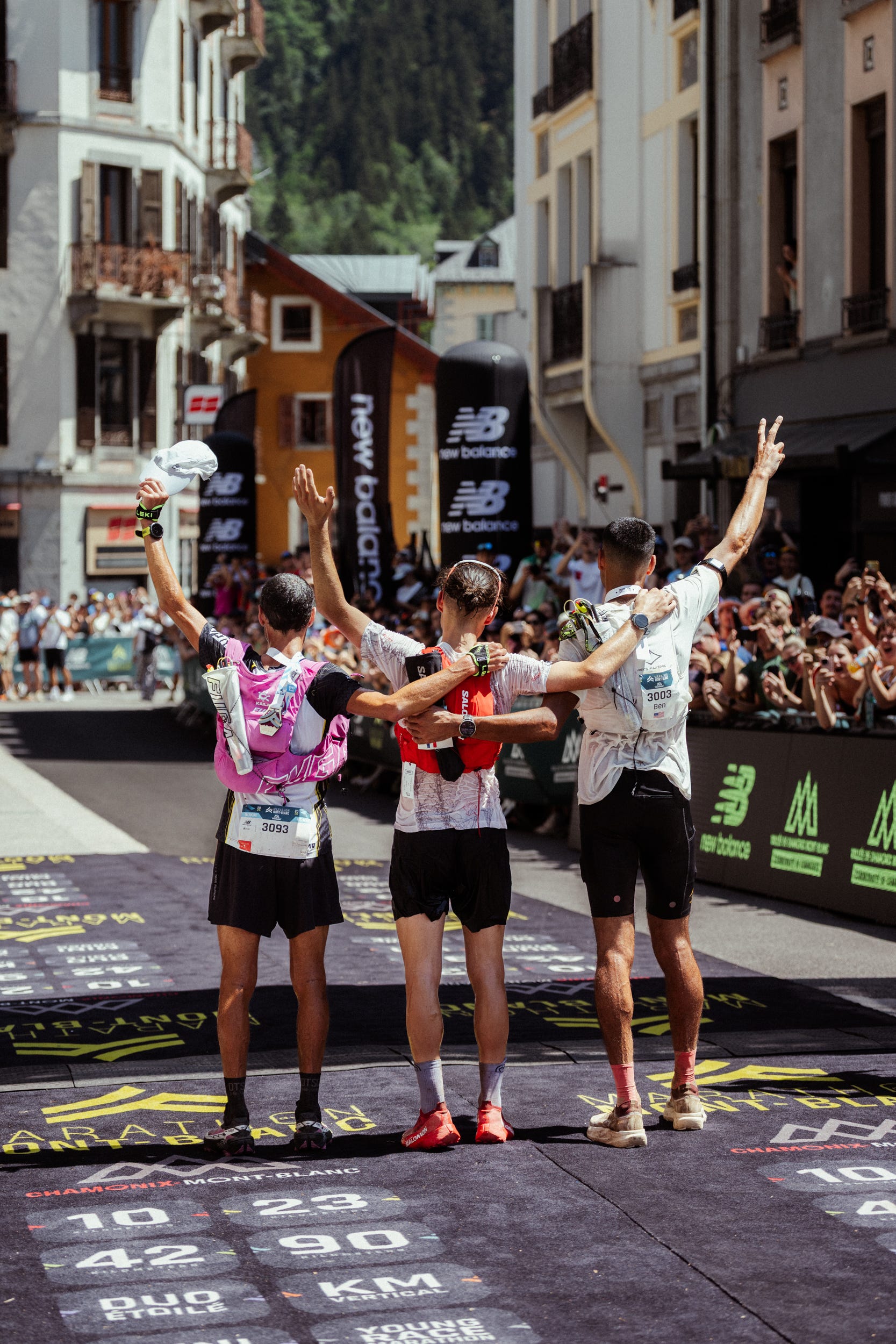
I hit pavement. Up the road I saw the red bag between a corridor of fans—too close, too far.
Nothing comes back. We only go forward. So go forward with folly, and finish strong.
Beautiful read and a performance to cherish and remember
The way you narrate the story of the race unfolding is quite good Ben brother. You consistency at big races in the last couple of years is bamboozling for sure. Hope you can have a crack at the win for UTMB this year. 40 seconds is not a lot of difference and it shows the way you have leveled up your game in this endurance world is great. You don't back dow from pushing & keep pushing till the very end, this is quite rare to see.