

At some point in the night I stopped looking back. The chasing headlamps were no longer visible. I felt very alone, and it was a nice feeling. Solitude in the mountains can be cozy, clarifying. I am doing the thing I came here to do. There is no turning back.
Really, it was accidental. I rolled into Les Contamines (32km) with the lead group. As I changed into a long-sleeved shirt, Kathy prepared my bag. I extended my arms, she slipped it on, and I was running again.
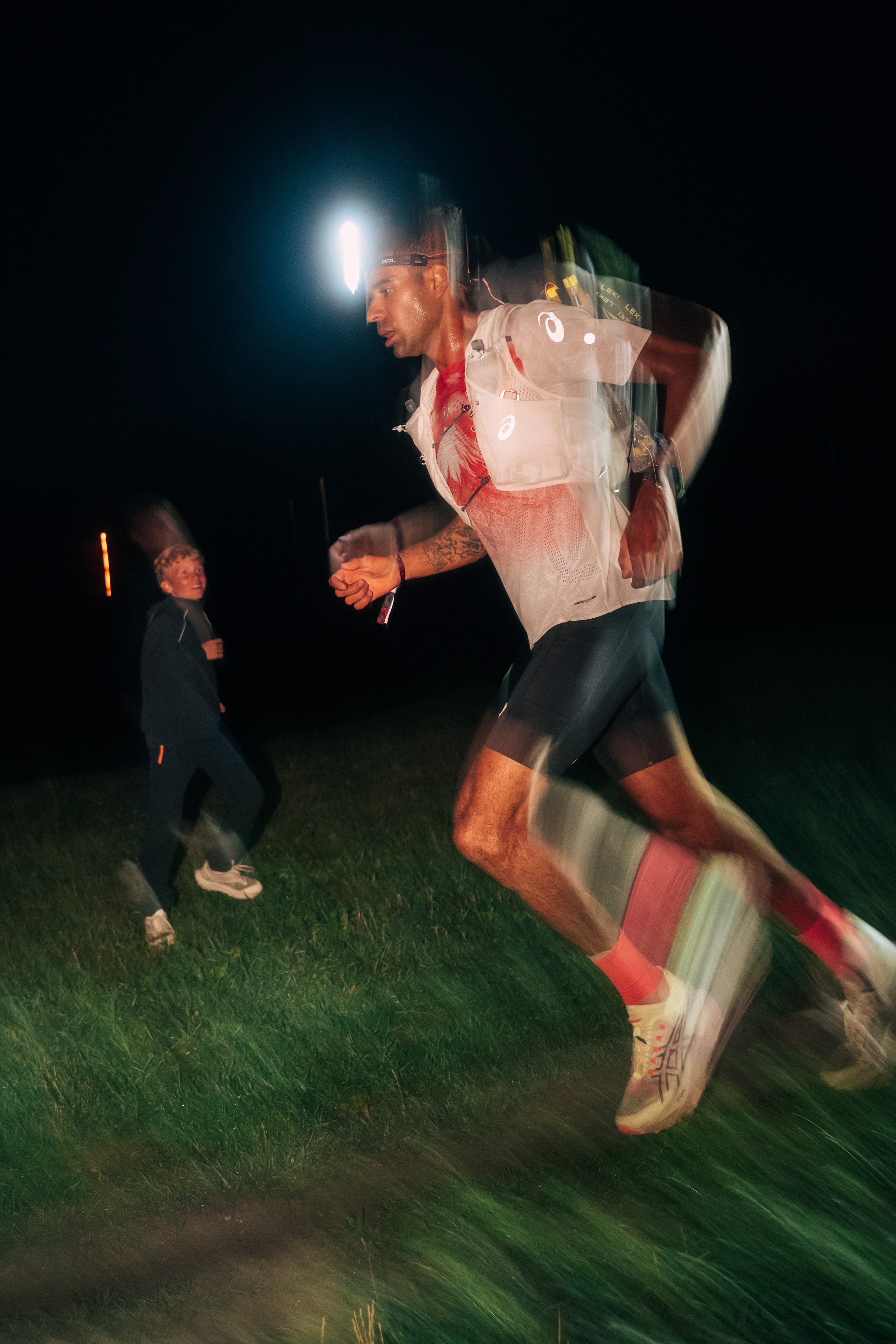
First out of the aid station, I passed through the crowds and into the quiet night. I checked over my shoulder. No one.
Well, run your 4:00 kilometres. Expect to see them soon. But by Notre-Dame de la Gorge I was still alone, clipping up the canal of hooligans and red smoke and noise big enough to burst the ears. It felt easy.
Then into the red-light section, where we were required to change headlamp settings to avoid disturbing the marmots. Still alone. I’d hoped for company through the night.
The red light blurred the definition of the path. I couldn’t quite make out the rocks, but the brain took what little information it had and told the feet where to land.
And so I gave myself over to instinct. What a relief. I let the dogs run, following behind, whistling if they got too far. As I passed into the alpine, the moon escaped a bank of clouds, briefly drowning me in white light before retreating.
Once we could switch our headlamps back to normal, I was really digging the effort. I hiked, as I do, with purpose, crossing Col du Bonhomme feeling good, the lead starting to accumulate.
I pushed the downhill and by the valley floor stopped looking back. Through Les Chapieux (55km), I held a steady pace and listened in on the legs. How was the tension in the hamstrings? The breathing? The cadence? Were the arms working? How were the feet hitting and leaving?
I cued on technique, looking for efficiency, and reached the base of Col de la Seigne in good time. My headlamp flashed. I changed the battery and jogged the switchbacks comfortably.
It felt good to be high and alone. Far below, headlamps oozed up the valley, a little river of people making the migration. Crossing the col at 2,500m, I decided to start putting time in the bank.
I rode the downhill hard and moved swiftly through the aid station. I worked the next climb to Arête du Mont Favre without urgency, double-poling to spare the legs, then pillaged the downhill into Courmayeur (81km).
Aid-Station Intermission
I reached Courmayeur in 7:50. Risky, perhaps, but I think we’ve been living in the stone age of performance over the 100-mile distance.
We run in fear of the distance: slow starts, conservative downhills. Over so many hours, small gains in average speed add up to huge chunks of time.
I think the biggest speed improvements will come here, as athletes improve their preparation and execution and let go of the shackles of past times. Look at Ludo Pommeret at Hardrock, Vincent Bouillard at Western, my own run at UTMB. We anticipate blowing up, but we don’t know where that limit is. As the leaders detonate old times, the top ten follows. Faster races, better competitive stories.
Back to Work
Meanwhile, I’d drunk chicken soup with rice, switched lamps, and let Kathy reload my bag. Out of there.
Leaving Courmayeur, a steep road fed into a steep trail. The legs were moving fine. The switchbacks to Refuge Bertone offered a first reckoning with the fatigue. I hiked with good tempo, several minutes faster than last year and with greater ease.
Then the long balcony trail: 80–90 minutes of rolling terrain. A relief to run, but hard to pace. Last year Tom and I crushed this section, working together, following the feet.
Alone, I struggled to judge the pace. I wasn’t hungry and fell behind on nutrition. Then some poor pole work on a steep bit tripped me up and snapped a pole. I refused to let this get out of hand and force-fed myself into Arnouvaz (100km). I would need the energy for the next climb. All told, I still went a minute faster than in 2025.
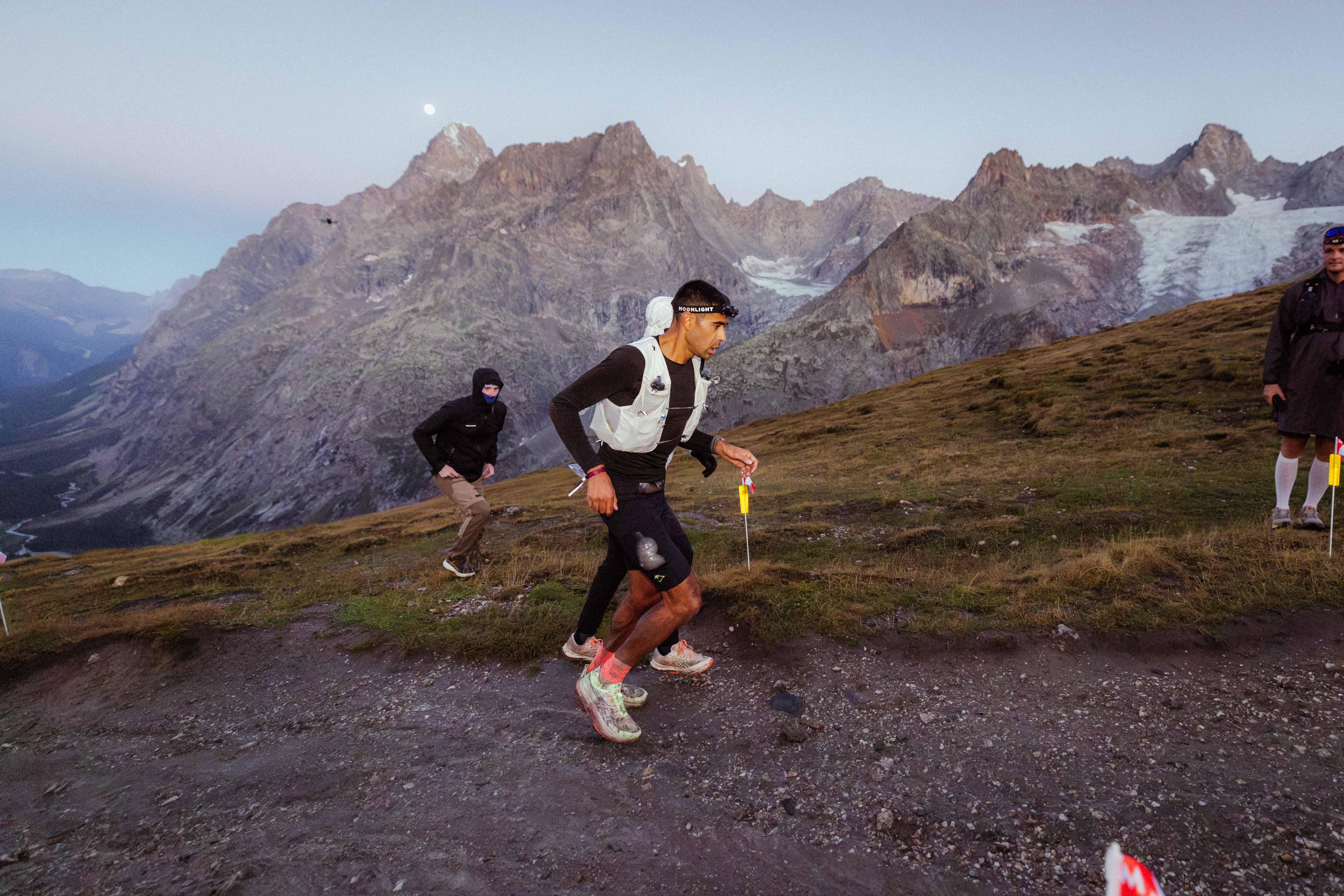
Grand Col Ferret at first light, before the trains of tourists. The moon was lithographed over the mountains, big and silver and strangely oracular, like someone was peeping through from the other side.
This climb destroyed me in 2025. This year I worked my way up patiently with one pole. Nothing easy about it. I could feel the fatigue now, but focused on big, regular breaths and long strides. On the final stretch I jogged, knowing I could put the ascent legs away for a while.
At the col I heard the lead was 22 minutes. That feels good. Run quickly, loosely, freely. Not hard, not pressing. Just easy speed.
It worked. The legs were swinging. Some boring, fairly easy running followed. I unplugged the brain, went with it, tossed back a gel before the climb to Champex-Lac.
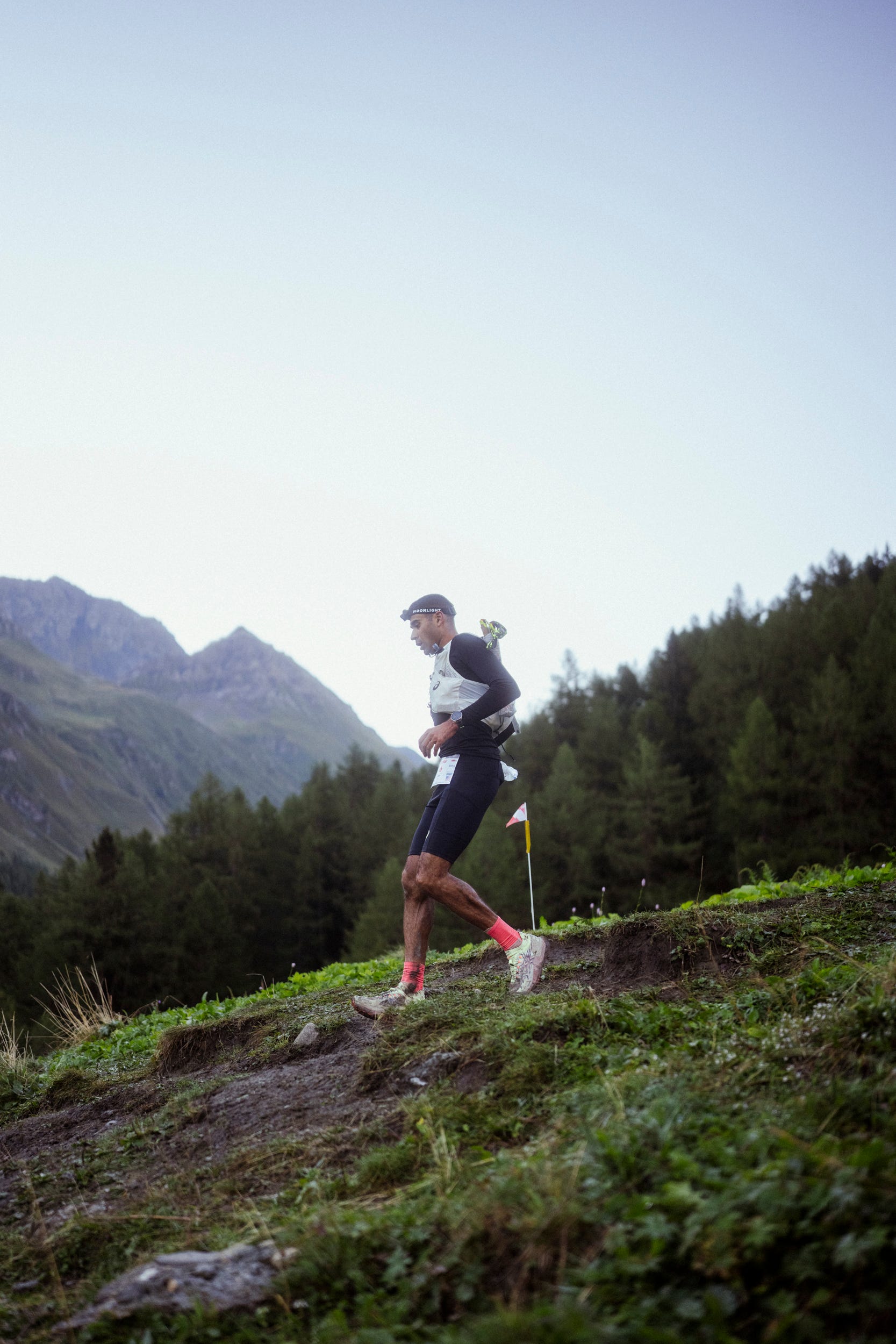
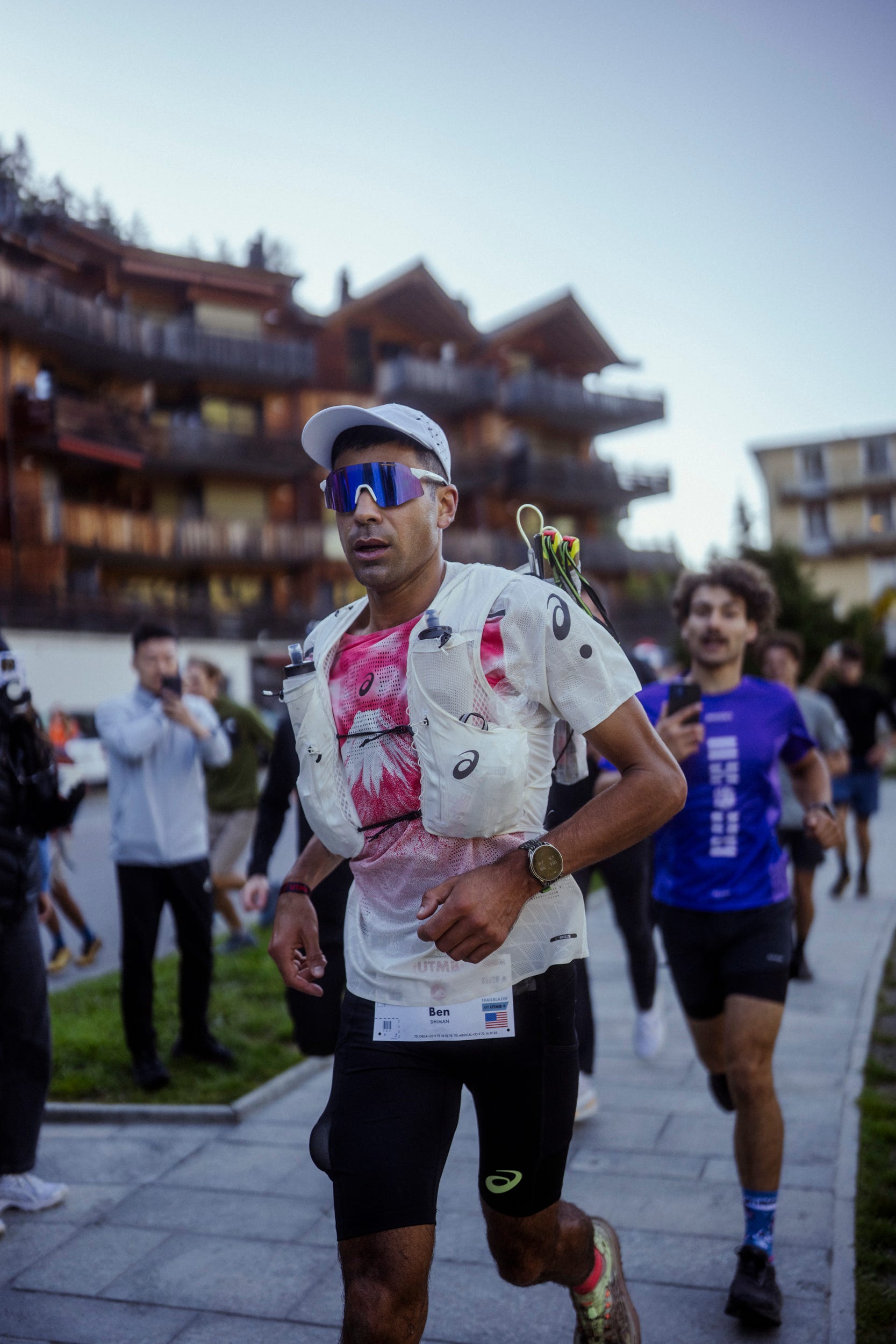
After so much haste, I expected the worst from the legs. They felt weak and heavy at first, then eased into the climb. Watching the footage later, I was impressed by the cadence. Still lucid, still connected. The pace was perfect.
I saw Kathy for the first time in four hours, ate cold-soaked oats spiked with an espresso from a nearby bar, and sipped my Arizona tea.
From here to the finish, you are never alone. A camera runner is always in pursuit, the trails lined with tourists and spectators. I find the attention another load to carry under immense fatigue. The terrain changes too: steeper, rockier, slower.
Bovine was probably my weakest climb. The legs started fine, then wore down until they had no power at all. I stayed positive and tried not to make any rash judgments.
In Trient, two climbs remained: one steep and burly, the other long and traversing. I took two gels at the base of Tseppes—100g of sugar—and rallied the legs. It wasn’t pretty, but compared with 2025, when I felt on the verge of complete ego-death, I managed to stave off the demons.
I ripped the downhill to Vallorcine (155km). If anyone was closing on the climbs, I knew I could regain time on the descents. I enjoyed the torture of that steep, rocky downhill, and like a real sadist made the camera runner work.
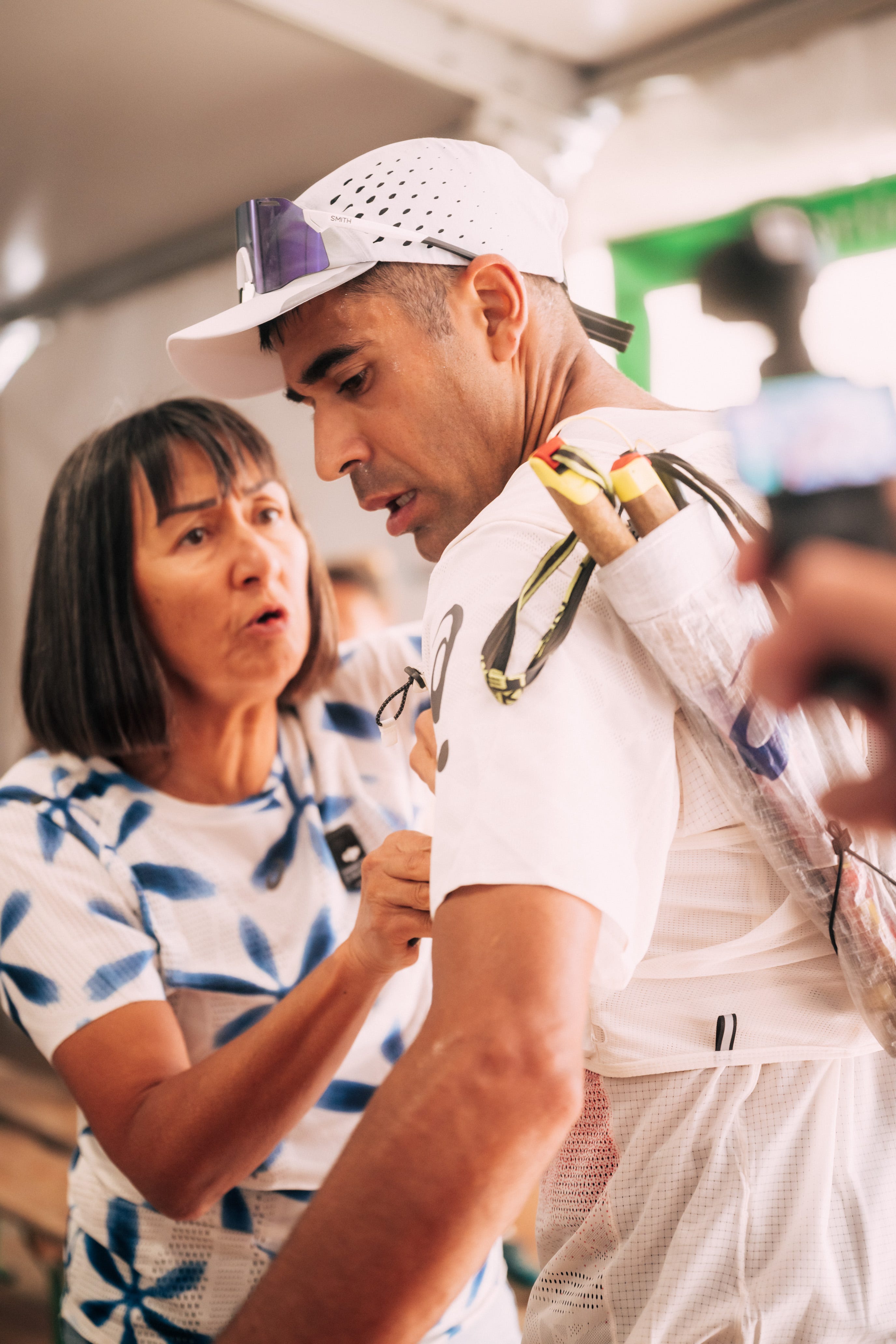
Vallorcine was swarming with fans. An express stop—one minute—and I left with an ice bandana around my neck. The running up to Col des Montets was slow, but psychologically I was okay. I am not cracking. I am just a slow old man.
Which brings us to the final climb. This was awful. Yes, someone was cheering my name every ten metres. Yes, I was on the verge of winning UTMB. Yes, I’d just seen my wife and son. But at this point, folks, I was fucked.
I gritted out every step and pushed with my arms. The little mid-climb descent went okay, but as the terrain eased, my attention lapsed. I found myself in a pile on the ground with a hole in my knee.
Mere flesh wound.
I hiked like my life depended on it, reaching the final stretch of ski piste to La Flégère (166km). A battalion of fans surrounded me and escorted me up. The air filled with their Allez Ben, their C’est pour toi cette année, their T’es un monstre. Halfway up, a sliver of silence. I shouted into it: MERCI TOUT LE MONDE.
Goosebumps rippled over me.
I took half a bottle of cola to nurse on the descent and launched into it. Nothing speedy. Good old solid descending, no poor footwork. The technical trail passed quickly, then the easy gravel slopes from La Floria.
Over the bridge and onto the last kilometre into town. Through the crowds and noise, I kept thinking about my stride. One step added to the next, as if the legs might still quit.
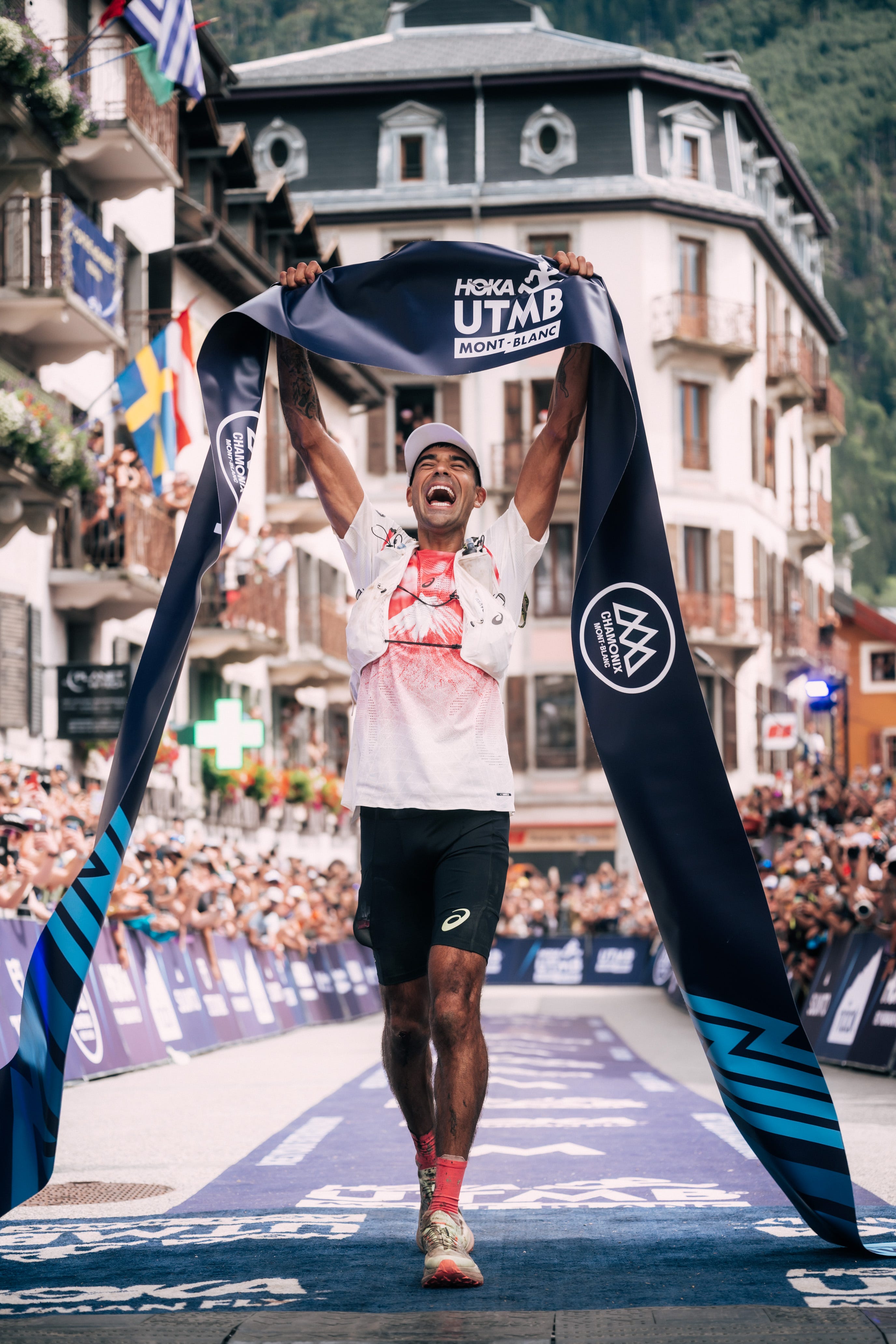
But they didn’t. I rounded the corner and saw the finish arch. It felt like fiction, like delusion. I walked the last five steps, picked up the tape and lifted it overhead with a war cry.
The thing is done. A fusion of dream and reality. What is real feels light as a dream, ungraspable. What I willed and believed arrives with a sense of déjà vu.
I look at the watch and shake my head.
Well done, Ben. I agree with 'We run in fear of the distance: slow starts, conservative downhills'. I spent about six months designing the pacing model for Ruth (Croft) this year, based on lab data we created, data from previous competitions, data scraped from 10 editions of UTMB, competitor data, and personal narratives. The focus was on what the optimal time was to reach Courmayeur, balancing first-half pace against second-half durability. What we found: it didn't matter much. A 20-minute window only translated into a 1-minute change in finish time. Basically, it came down to athlete capacity; if they were capable of winning they would fine a way, regardless of how the race was paced. I think what you have stated will change the model of how ultras are run.
Your reality is our dream. Enjoy it!